Forget 'Hidden Gem' Cities — The Best Kept Secrets Are Already Inside the World's Most Famous Ones
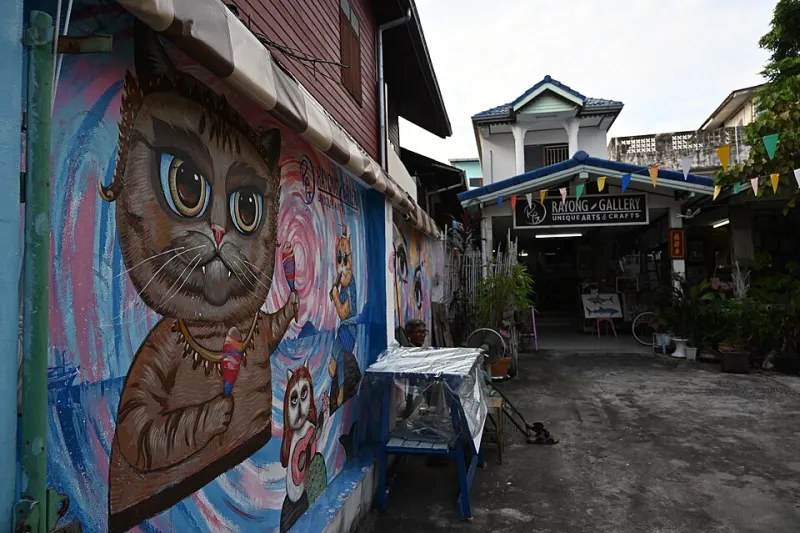
Photo: PattayaPatrol, CC BY-SA 4.0, via Wikimedia Commons
The travel internet has a hidden gem problem. Every other article promises to reveal some secret destination that hasn't been "ruined" yet — some coastal village or mountain town that the masses haven't found. And look, those places are real and worth visiting. But the underlying premise — that you need to leave major cities to find authenticity — is increasingly questionable.
Because here's what's actually true: the world's most famous cities are enormous. They contain multitudes. And buried inside the tourist-mapped, guidebook-approved, Instagram-filtered versions of Paris, Tokyo, and Mexico City are neighborhoods that operate on a completely different frequency. Places where locals actually live, eat, argue, make art, and go about their days without a single tour bus in sight.
You don't have to abandon big-city infrastructure — the international airports, the reliable transit, the range of accommodation — to find something that feels genuinely real. You just have to walk a few blocks further than most people do.
Here are eight neighborhoods worth your time.
Faves, Mexico City
Mexico City gets plenty of attention for Roma and Condesa, and rightfully so. But Faves — short for Fray Servando — sits southeast of the historic center in a way that most visitors never reach. It's working-class, colorful, and home to some of the most serious street food in a city that takes street food extremely seriously. The mercados here aren't styled for tourists. The tlayudas and memelas come from vendors who've been in the same spot for decades. Go hungry, go without an agenda, and let the neighborhood show you what it wants to.
Pigneto, Rome
Everyone goes to Trastevere for the "real Rome" experience, and at this point, Trastevere is basically Trastevere-themed. Pigneto, a 20-minute tram ride east of the center, is where the actual creative class lives. It's been compared to Brooklyn circa 2008 — street art, independent wine bars, aperitivo culture that starts at 6pm and doesn't apologize for it. The neighborhood was famously featured in Pasolini's films, and it still carries that slightly rebellious, deeply Roman energy. Fewer selfie sticks. More actual conversation.
Shimokitazawa, Tokyo
Tokyo is so relentlessly organized and future-facing that its pockets of deliberate analog culture feel almost radical. Shimokitazawa — a short train ride from Shibuya — is Tokyo's indie music and vintage clothing neighborhood, a maze of narrow streets and two-story wooden buildings housing record stores, live music venues, and curry shops that have been there since the '80s. It's the Tokyo that Tokyo's young creative residents actually choose to spend their weekends in. That's a decent endorsement.
Gràcia, Barcelona
The Gothic Quarter and Las Ramblas handle Barcelona's tourist volume with all the grace of a stadium concert. Gràcia, uphill and slightly north, is the city within the city that Barcelona locals actually love. It was its own independent municipality until 1897 and still acts like it — the neighborhood has a distinct identity, a network of small plazas where people genuinely sit and talk rather than perform sitting and talking, and a density of good, affordable restaurants that put the tourist-zone tapas bars to shame. The Festa Major de Gràcia in August, where residents decorate their streets in elaborate themes, is one of the best free events in Europe.
Woodside, Queens — New York City
Yes, New York counts. Because most American travelers who visit New York City spend their entire trip in Manhattan, which means they're missing the most culturally diverse urban landscape on earth. Woodside in Queens is a neighborhood where you can eat Filipino lechon, Thai boat noodles, Irish pub food, and Colombian bandeja paisa within a four-block radius, all at prices that will make Manhattan feel like a scam. Take the 7 train. It's one of the best decisions you can make in New York.
Bokaap, Cape Town
Cape Town's waterfront and Table Mountain draw enormous crowds, and they're worth seeing. But the Bo-Kaap neighborhood, perched on the slopes of Signal Hill, is where the city's Cape Malay community has lived for centuries — and where the houses are painted in colors so vivid they look digitally enhanced. It's a real, inhabited neighborhood, not a museum, and the food reflects centuries of spice-route history. The koesisters (spiced doughnuts, not to be confused with the Afrikaner version) from the local bakeries alone justify the trip up the hill.
Le Marais, Paris — But Specifically the Northern Part
Wait, hear us out. The southern end of Le Marais is firmly on every tourist itinerary. But the northern stretch — around Rue de Bretagne and the Canal Saint-Martin area bleeding into the 10th arrondissement — has a different character entirely. This is where Parisians actually do their Saturday market shopping, where the coffee is third-wave and genuinely good, and where you can sit outside a wine bar on a Tuesday evening and feel like you live there. The distinction matters: the neighborhood isn't hidden, but the specific part of it that rewards slow exploration often is.
Fitzroy, Melbourne
Sydney tends to get the international spotlight, but Melbourne has a strong argument for being Australia's most livable city — and Fitzroy is the neighborhood that makes that case most convincingly. It's got the street art, the record stores, the brunch culture, and the density of live music venues that Melbourne is known for, all in a walkable grid of Victorian-era terraced houses. The food scene spans Ethiopian, Vietnamese, and some of the best wood-fired pizza in the Southern Hemisphere. It's the kind of neighborhood where you plan to spend two hours and end up spending eight.
When to Skip the Famous Stuff Entirely
Here's an honest thought: if you're traveling to Mexico City for four days and you spend one of those days in Faves eating tlayudas and wandering the market, that might be more valuable than your third trip to the Anthropology Museum. The famous attractions are famous for reasons, and we're not telling you to ignore them. But the math on your time is worth doing.
If you've already seen the Eiffel Tower, spending your next Paris afternoon in the 10th arrondissement watching the city actually function might give you something the tower can't. The magic of major cities isn't just in their monuments — it's in the living, breathing tissue of neighborhoods that tourists mostly skip.
Your itinerary doesn't have to be all-or-nothing. Go see the big thing in the morning. Then walk somewhere most people don't.