That Photo Lied to You — Here's How to Stop Booking Trips Based on Other People's Highlight Reels
The Moment the Postcard Doesn't Match the Place
Let's talk about the Trevi Fountain. Not the version you've seen in a thousand Instagram posts — that low-angle shot, perfect golden light, not a soul in sight. The real one, which on any given summer afternoon has approximately 3,000 people packed shoulder-to-shoulder around it, pickpockets working the crowd, and a smell that varies by temperature.
Is it still beautiful? Absolutely. Is it the experience those photos promised? Not even close.
This gap — between the curated image and the lived reality — is one of the most underexamined problems in travel planning. And it's getting worse. As photo-sharing platforms become the dominant way people discover destinations, the feedback loop tightens: a striking image gets shared, more people visit to recreate it, the place gets more crowded, the experience gets worse, but the photos keep looking great.
So how do you break out of it?
Why Travel Photography Is Structurally Dishonest (and That's Okay)
This isn't about blaming photographers or calling out influencers. It's about understanding a simple truth: cameras don't capture experience, they capture light.
A skilled photographer at Horseshoe Bend in Arizona can make the place look like an untouched wilderness. What they can't show you is the two-hour wait for a parking spot, the guardrail they cropped out, or the fact that you're sharing a canyon overlook with 800 strangers. None of that is dishonest exactly — it's just the nature of the medium.
Psychologists who study travel behavior have a term for what happens when reality doesn't match expectation: contrast effect. When we've built up a mental image of somewhere — especially a vivid, beautiful image — the actual experience gets measured against that benchmark. Even a genuinely wonderful place can feel like a letdown when it doesn't match the fantasy version we've been carrying around.
The solution isn't to lower your expectations. It's to build more accurate ones.
What Real Travelers Actually Say
We asked a handful of Travelingo Holiday readers about their biggest expectation-versus-reality moments.
"I spent two years wanting to go to Santorini because of the photos," said Maria, a teacher from Denver. "When I got there, I kept looking for the shot — the white buildings, the blue dome, no people. It doesn't exist in July. I was so focused on finding the picture that I almost forgot to just enjoy being there."
Daniel, a software developer from Atlanta, had the opposite experience. "I booked a trip to Porto, Portugal, mostly because flights were cheap and I didn't know much about it. No expectations at all. It ended up being one of the best trips of my life — exactly because I wasn't comparing it to anything."
That contrast is telling. Low expectations, honestly formed, tend to produce better travel experiences than high expectations built on other people's best-case moments.
The Specific Ways Social Media Distorts Destination Reality
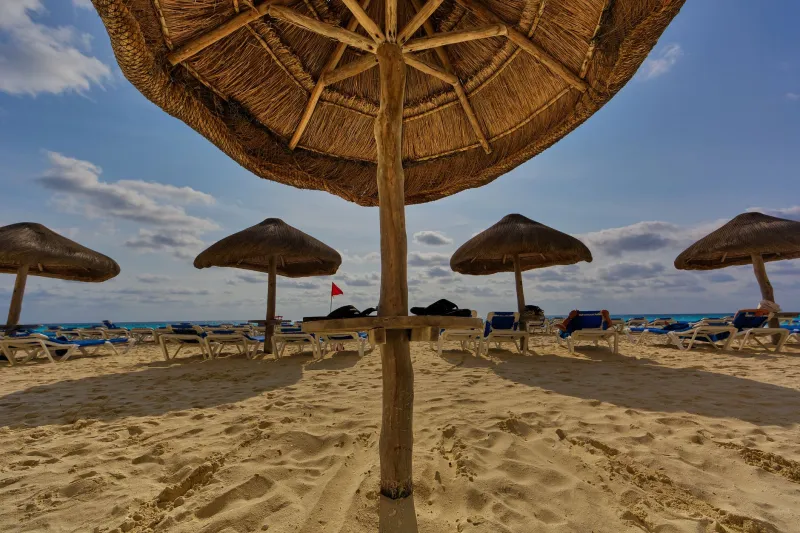
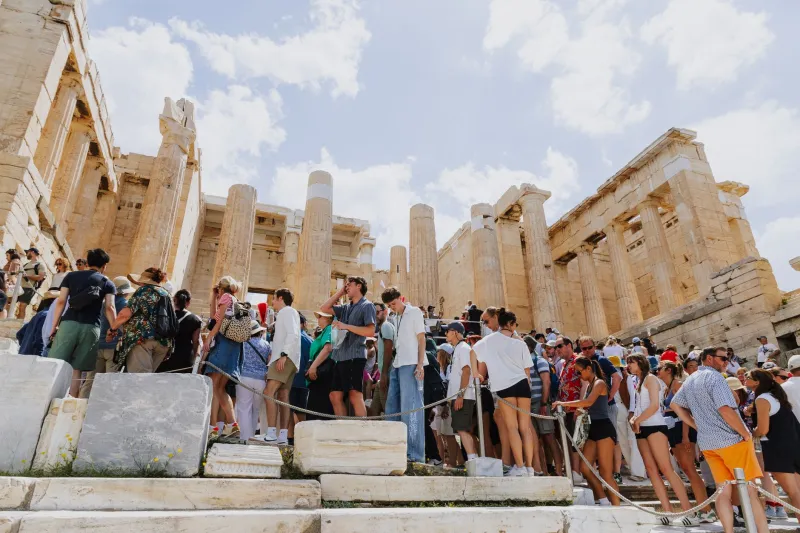
Crowds get cropped. Nearly every famous viewpoint, beach, and landmark looks empty in photos because photographers either arrive at 5am, wait for gaps in foot traffic, or simply frame out the masses. The real experience at peak times is rarely what the image suggests.
Seasons get flattened. That shot of the Amalfi Coast looks the same whether it was taken in May or August — but the actual experience of visiting in those two months is wildly different in terms of price, crowds, and availability.
The unglamorous parts disappear. Nobody posts the 45-minute taxi queue at Cancún airport, the mediocre dinner they had because they were too tired to find somewhere good, or the hotel room that looked nothing like the listing photos. These are all real parts of travel.
Accessibility gets hidden. A waterfall that looks serene and reachable in photos might require a 6-mile round-trip hike on rough terrain. That beach might only be accessible by boat at low tide.
A Different Way to Research Before You Book
Go to Reddit before you go to Instagram. Subreddits like r/travel and destination-specific communities (r/Italy, r/Thailand, r/solotravel) are full of people asking honest questions and getting honest answers. You'll find out about the parking situation at Horseshoe Bend, the smell near the Trevi Fountain in August, and which hotels on Booking.com have photos that are about five years out of date.
Read the one-star and two-star reviews. Not to be talked out of going, but to understand what the real pain points are. If twelve different people mention the noise from the street, you know what to expect. Expectation set. Disappointment avoided.
Search for "[destination] in [month you're traveling]" rather than just the destination. The experience of visiting Paris in August (when half the city shuts down and tourists outnumber locals 10-to-1) is completely different from visiting in November. Month-specific searches give you a more honest picture.
Watch vlogs, not reels. A 15-second reel is optimized for beauty. A 15-minute travel vlog, even a well-produced one, will almost always show you more of the unglamorous reality — the commute, the wait, the rain, the moment things didn't go to plan.
Ask yourself what you actually want from a trip. This sounds obvious, but most people skip it. Do you want relaxation? Cultural depth? Adventure? Food? If your answer is "I want to feel like I'm in a movie," you might need to dig a little deeper — because movies are also edited.
Planning for the Place, Not the Picture
Here's a reframe that changes everything: instead of asking "what does this place look like?" ask "what does this place feel like to be in?"
Savannah feels languid and literary. New Orleans feels alive and slightly chaotic in the best way. Iceland in winter feels like being on another planet. These are experiential qualities that no photograph can really convey — and they're the things that will actually determine whether you love a trip.
When you find yourself deep in someone's travel feed at midnight, bookmarking places based on how they photograph, pause and ask: would I love being here, or do I just love looking at it?
The answer might be the same. But it might not. And knowing the difference before you book is worth more than any travel hack you'll ever read.
The Trips That Surprise You Are the Best Ones
There's a reason Daniel's Porto trip hit differently than Maria's Santorini trip. It's not that Santorini isn't worth visiting — it absolutely is, with the right expectations and the right timing. It's that the best travel experiences tend to happen when reality has room to exceed what you imagined, rather than just trying to measure up to it.
Book the trip. See the famous thing. Take the photo. But also put the phone down for a while and let the place be what it actually is — messy, imperfect, and usually more interesting than the highlight reel suggested.